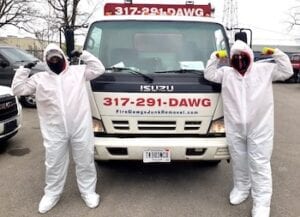
Recently, an IOSHA Complaint landed in our Info Account’s inbox. As a small business owner, it would be easy to see this and become wrought with worry, start panicking, become paranoid, etc. Instead, we followed advice from the man Jocko Willink and said, “Good.”
https://www.youtube.com/watch?v=IdTMDpizis8
Good? Yes, Good. OSHA raíses the bar for safety. COVID-19 is uncharted territory and if there’s something we could be doing better as a junk removal company, then we wanted to know about it. Who better to help our growing company become more well rounded in regards to safety than OSHA.


What is a Non-Formal Complaint?
https://www.in.gov/dol/3145.htm A non-formal complaint can be made anonymously by anyone and does not require a signature. The person submitting the non-formal complaint even has the option to forego leaving their name, phone number and email thereby completely anonymous. Non-formal complaints result in IOSHA contacting the company by phone, mail, e-mail or fax to investigate alleged hazards.The Non-Formal Complaint
Here is what it looked like: Email Subject: COVID-19 Non-formal Complaint Form Dear Employer, The Indiana Occupational Safety and Health Administration (IOSHA) received a complaint concerning alleged health hazards related to the coronavirus outbreak at your company. The specific nature of the concern is as follows: Employer not enforcing social distancing Other They keep scheduling jobs that require us to go into customers homes and violate social distancing. This letter is not a citation, nor is it a notification of proposed penalty which, according to the IOSH Act, may be issued only after an inspection of the workplace. We have not determined whether the hazard(s), as alleged, exist at your workplace and are not planning to conduct on onsite inspection at this time. However, if we do not receive a response from you indicating the appropriate action has been taken, an inspection may be conducted. Since allegations of hazardous conditions have been made, you should investigate the alleged conditions and make any necessary corrections or modifications. Please advise the Agency in writing of your findings and of any necessary corrective actions taken within five (5) working days of receipt of this letter. Your response should be detailed, stating specifically what action you have taken to correct any hazards along with documentation like photos, invoices, etc. Merely reciting the actions you have taken in not a sufficient response without documentary evidence. The preferable method of communicating your response is by email to the below email address. Applicable photographic evidence of any corrected conditions must be provided. Other information concerning corrected items including, but not limited to, training records, copies of programs, directives or memos sent to employees, equipment purchase orders, and other supporting materials must also be provided. The following interim guidance may help prevent workplace exposures to acute respiratory illnesses, including seasonal flu and other flu-like viruses, in non-healthcare settings. The recommended strategies for employers to use at this time cover the following topics, and can be found at Centers for Disease Control and Prevention’s (CDC) website which is updated regularly: https://www.cdc.gov/flu/about/index.html The CDC is also recommending employers take the following steps to prevent the spread of Influenza and other Influenza-like viruses:- Actively encourage sick employees to stay home
- Accommodate sick employees through separation or telework (if possible)
- Emphasize respiratory etiquette and hand hygiene by all employees
- Perform routine environmental cleaning
- Check government websites (CDC, State Department) for any travel advisories (where applicable)
- Develop a workplace plan for public health emergencies.
- The CDC and federal OSHA maintain a website that provides information to employers concerned with COVID-19 infections in the workplace. The information can be found at the following website and is updated regularly: